Welcome to the AANHPI Student Achievement Program
The AANHPI Student Achievement Program is geared towards the personal, professional, and academic success of all students with a focus on the histories, stories, and cultural backgrounds of Asian American, Native Hawaiian, and Pacific Islander (AANHPI) communities. All CSUB students are welcome to participate in our events and resources regardless of sex, gender, race, or any other protected class. We provide a holistic approach to student success through the following resources:
Academic and Career Support:
We provide one-on-one mentoring to students involving career exploration, academic support, and referrals to resources available at CSU Bakersfield and within the community.
Academic and Cultural Programming:
We understand that student success is tied to students' well-being and the more students are connected on our campus, the more supported they feel. In addition to academic support, we also create and host events catered towards building community, belonging, and identity exploration.
AANHPI Cultural Lounge:
Located in the Rohan Building, this cultural lounge offers a welcoming space for all to explore and learn more about AANHPI cultures through curated books and interactive games. It provides students with a place to learn, connect with others, and relax between classes.
Ways to Connect
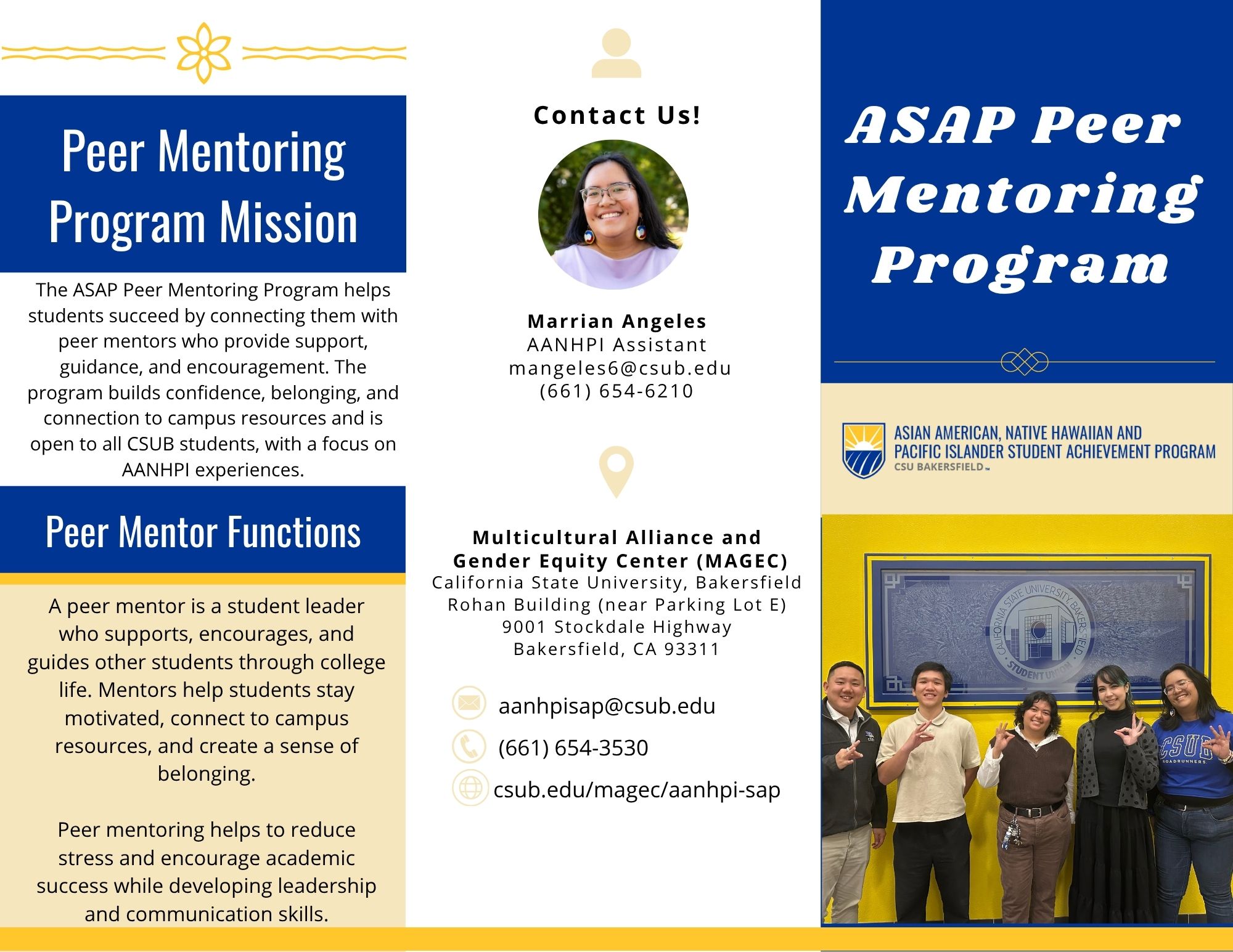
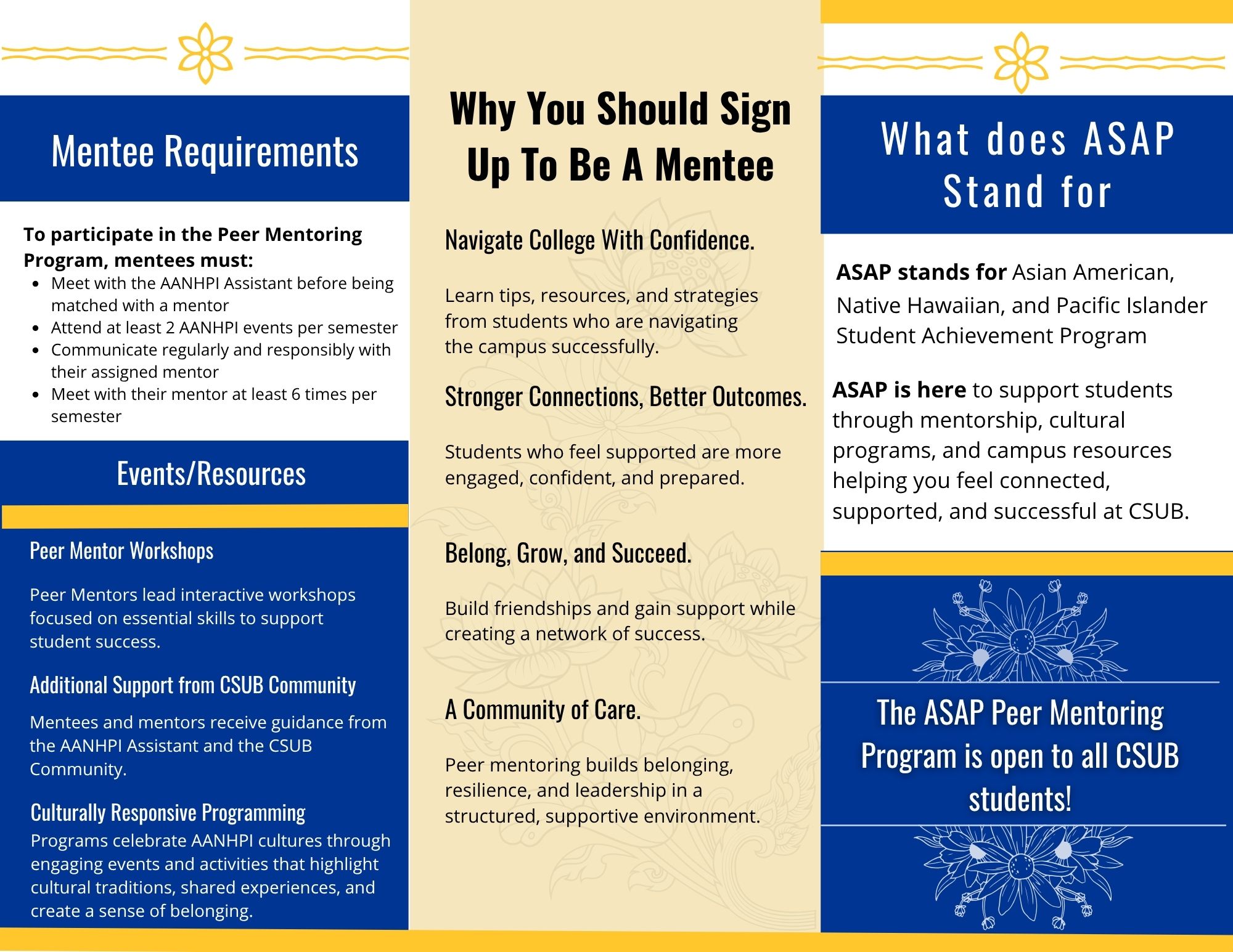
AANHPI Peer Mentoring Program
The AANHPI Peer Mentoring Program is dedicated to providing all CSUB students with one on one guidance throughout the school year. Whether it's academic, career exploration, or a listening ear, our mentors are dedicated to helping you succeed at CSUB.
First pairing of students and mentors are set to start in Fall 2026. If you're interested, please reach out to Marrian Angeles through mangeles6@csub.edu to start the process.
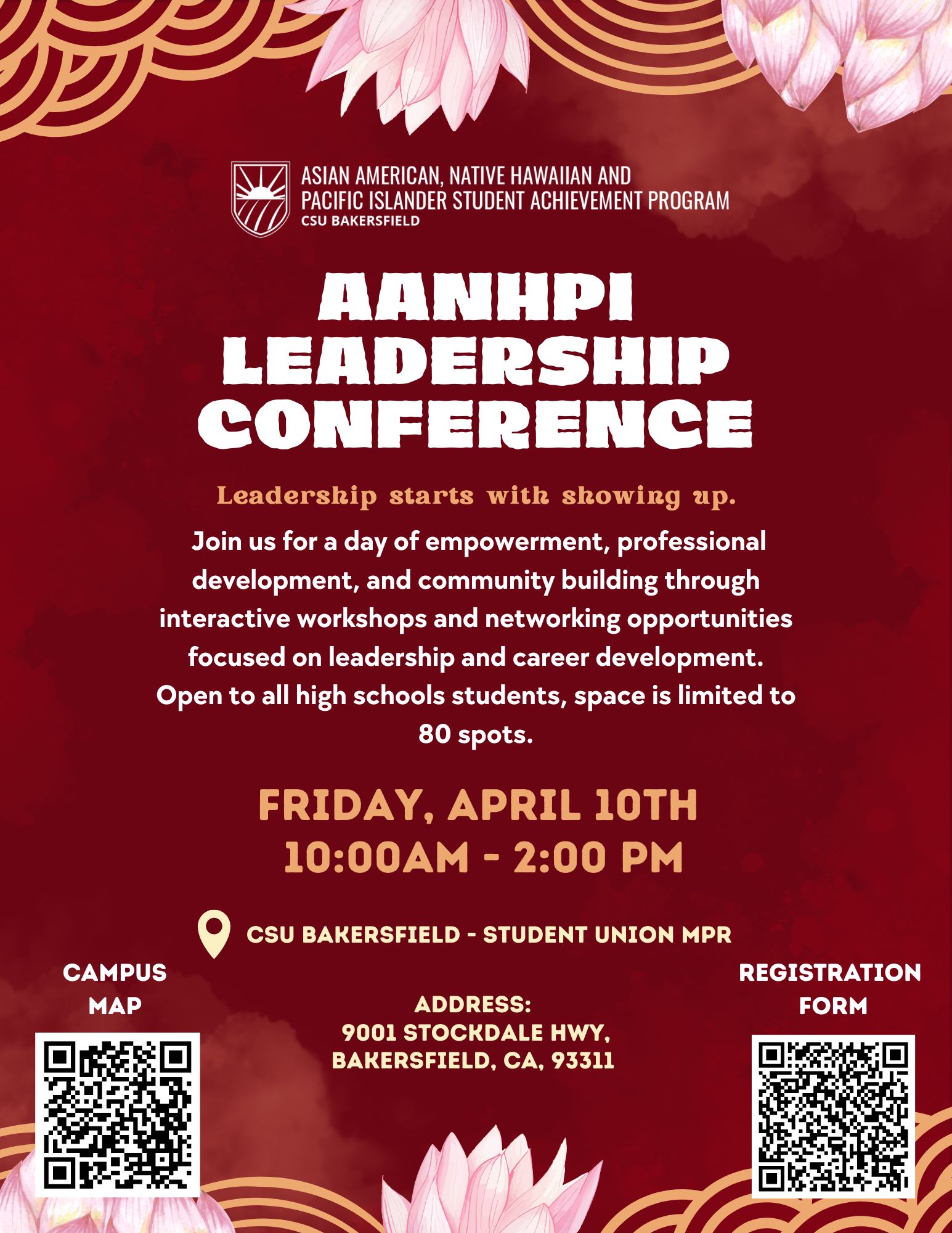
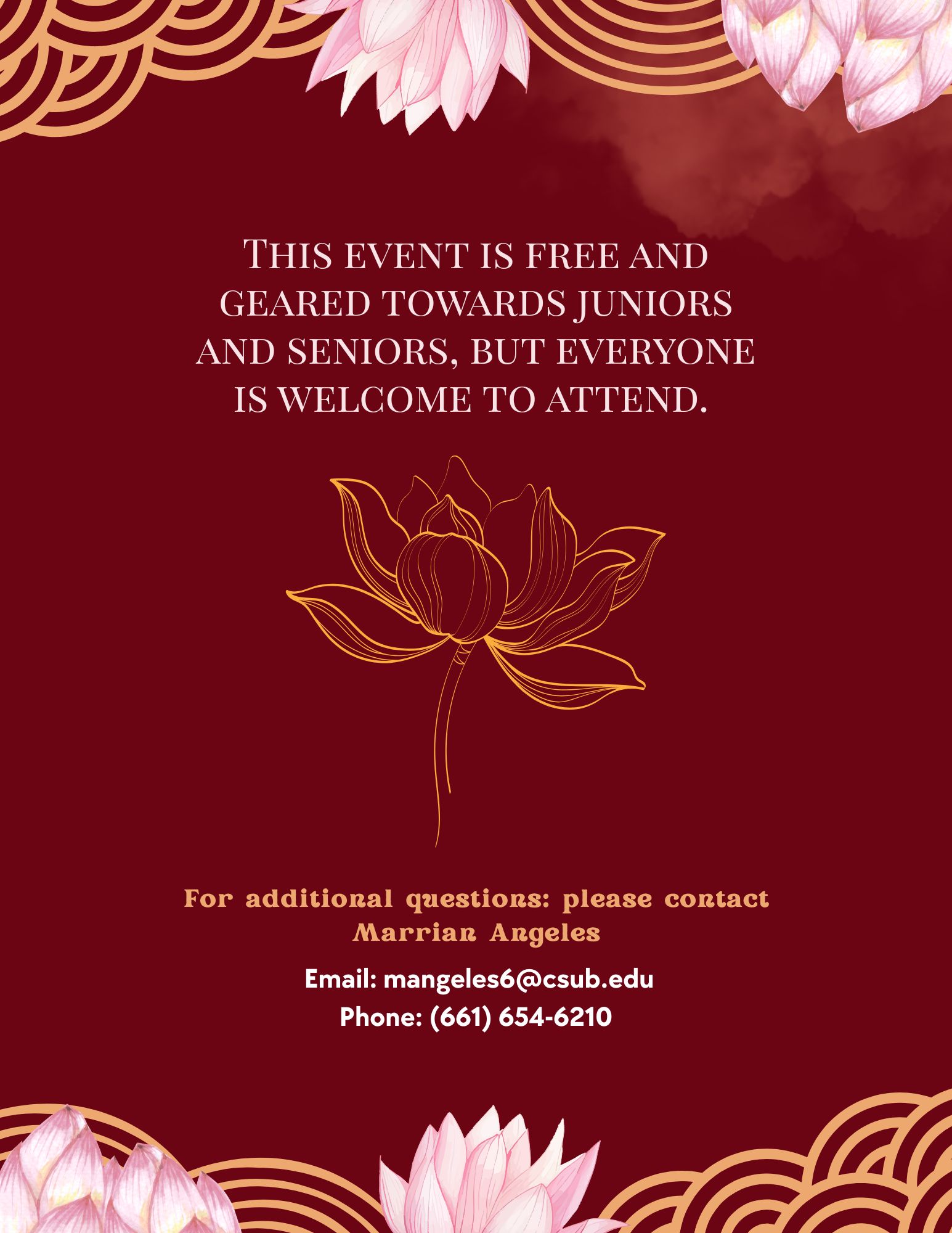
AANHPI Leadership Conference
Our inaugural AANHPI Leadership Conference is coming up on Friday, April 10, 2026. This conference is geared towards local high schools students to connect with community, learn valuable leadership skills, and connect with CSUB.
Meet With the Program Assistant
Our AANHPI Assistant is here to help students thrive academically, professionally, and personally. Click the button below to schedule a meet with our AANHPI Assistant!Sign Up for Our Email List
Sign up for our email list for updates on the AANHPI Student Achievement Program's upcoming events and programs throughout the year.Frequently Asked Questions
- In 1978, APA (Asian Pacific Islanders) was federally recognized in Asian Pacific Week by Jimmy Carter. The week was later extended to the month of May in 1990 by George H.W Bush (Time Article).
- The term AAPI, Asian American Pacific Islander, has been added into the language to highlight Asian American and Pacific Islander as their own separate parts of the acronym.
- In 2007, AANAPISI (Asian American and Native American Pacific Islander Serving Institutions) was established by the U.S Congress to recognize college campuses that serve a minimum 10% of total enrollment to the AANHPI community (U.S Congress AANAPISI Information Fact Sheet).
- Recently, the term APIDA (Asian American Pacific Islander Desi American) was used, referencing the South Asian community, or Desi, in the acronym. APIDA has been added into common language and into several university's APIDA Heritage Month celebrations, including CSU Bakersfield.
The community is generally grouped by regions, although it is important to note that some of these can be politically controversial. There is tremendous diversity, with Asia having more than 40 countries, and there are more ethnicities than countries (for example, the Hmong are an ethnic group from Laos). Asian diasporas are extremely large and ethnic identity oversimplifications do not apply. For example, people of Japanese origin in Brazil culturally identify as Brazilians, those of Chinese origin in Guatemala identify as Guatemalans; whereas hyphenated identities are more common in the United States as evidenced by terms like Asian American, or Korean American.
Notions of ethnic and national identity carry political, social and familial meanings
too complex to analyze here. See
https://www.api-gbv.org/resources/census-data-api-identities/ for more on identity and statistics.
- Central Asians Afghani, Armenian, Azerbaijani, Georgians, Kazakh, Kyrgyz, Mongolian, Tajik, Turkmen, Uzbek
- East Asians Chinese, Japanese, Korean, Okinawan, Taiwanese, Tibetan
- Native Hawaiians and Pacific Islanders (in the United States Jurisdictions & Territories) Carolinian, Chamorro, Chuukese, Fijian, Guamanian, Hawaiian, Kosraean, Marshallesse, Native Hawaiian, Niuean, Palauan, Pohnpeian, Samoan, Tokelauan, Tongan, Yapese
- Southeast Asians Bruneian, Burmese, Cambodian, Filipino, Hmong, Indonesian, Laotian, Malaysian, Mien, Papua New Guinean, Singaporean, Timorese, Thai, Vietnamese
- South Asians Bangladeshi, Bhutanese, Indian, Maldivians, Nepali, Pakistani, Sri Lankan
- West Asians This is a contested term, most people from the region do not self-identify as such. West Asia is typically referred to as the Middle East; and geographically includes the countries of Bahrain, Iran, Iraq, Israel, Jordan, Kuwait, Lebanon, Oman, Palestine, Qatar, Saudi Arabia, Syria, Turkey (straddles Europe and Asia) United Arab Emirates and Yemen
- Runners Involve (platform for student organizations and clubs)
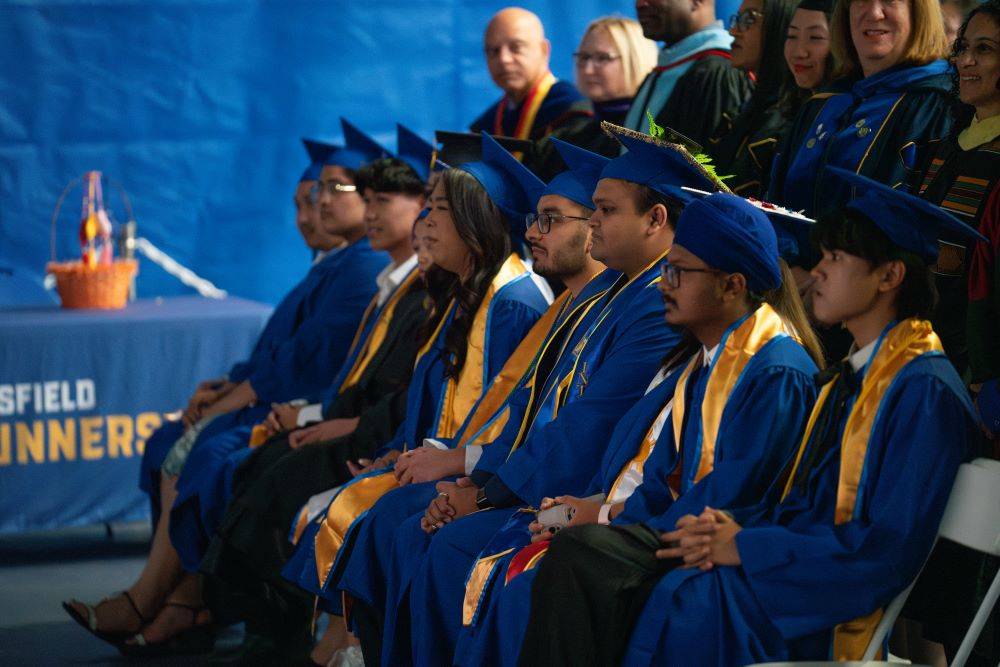
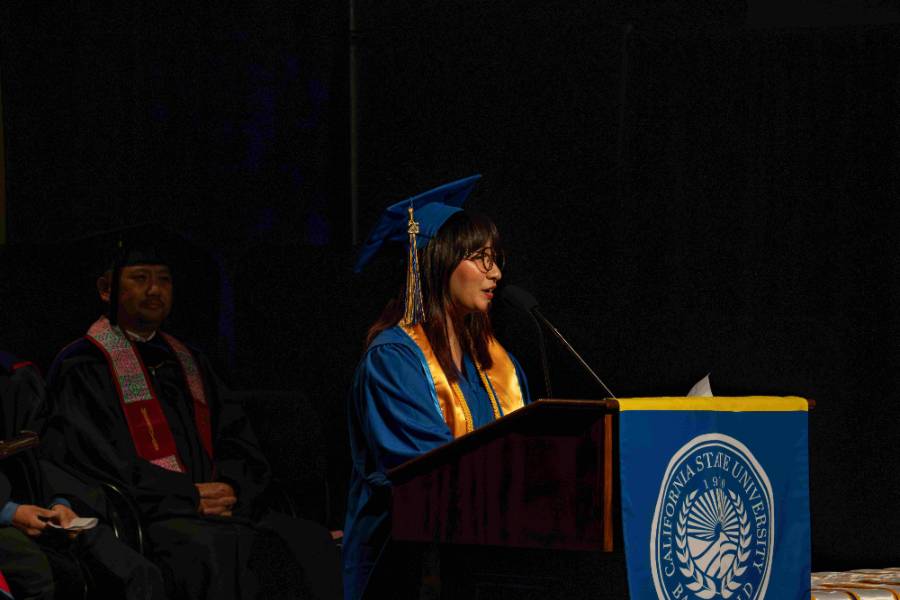
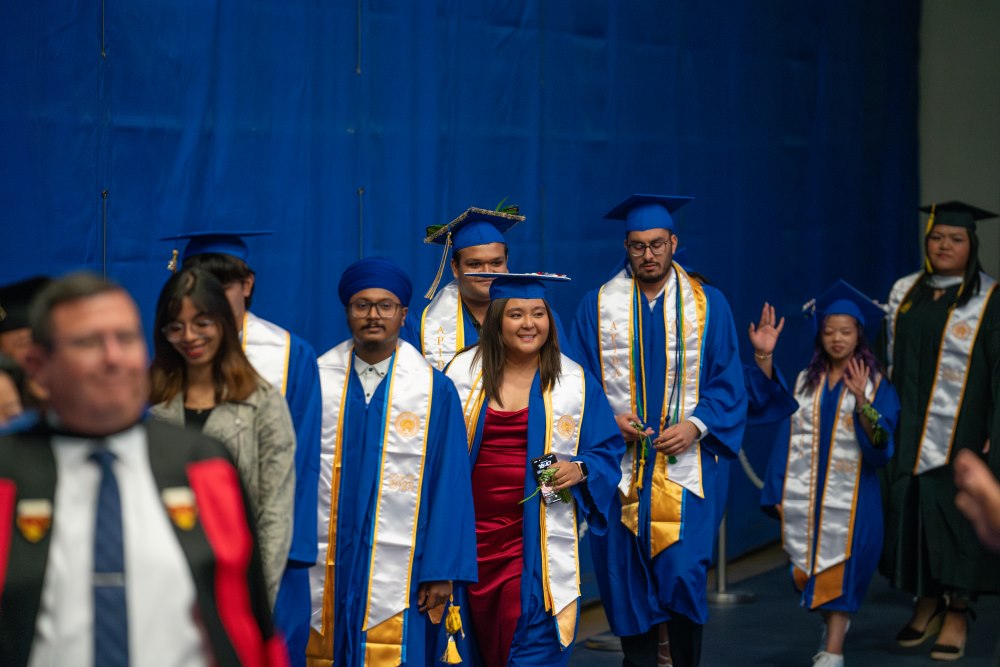
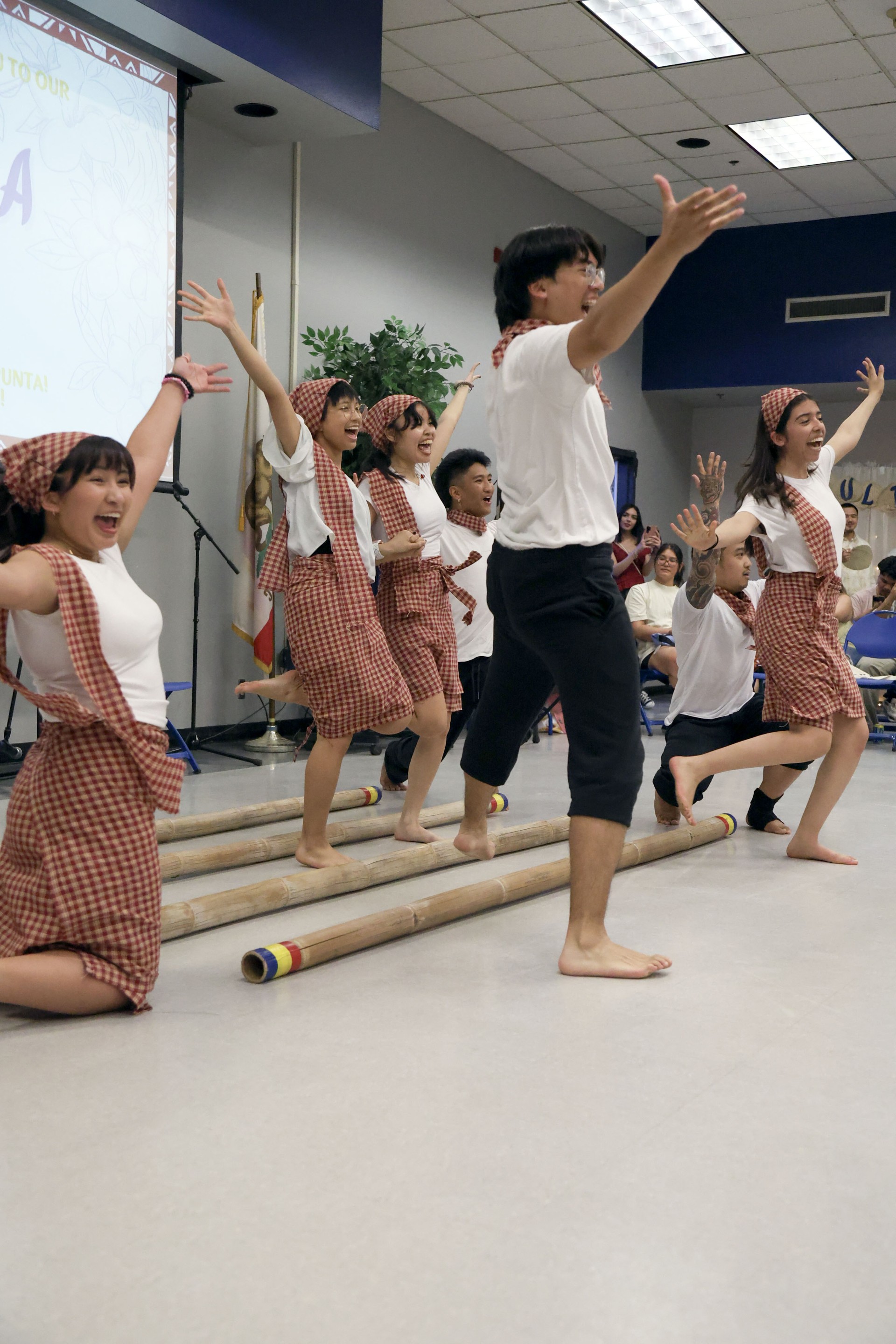
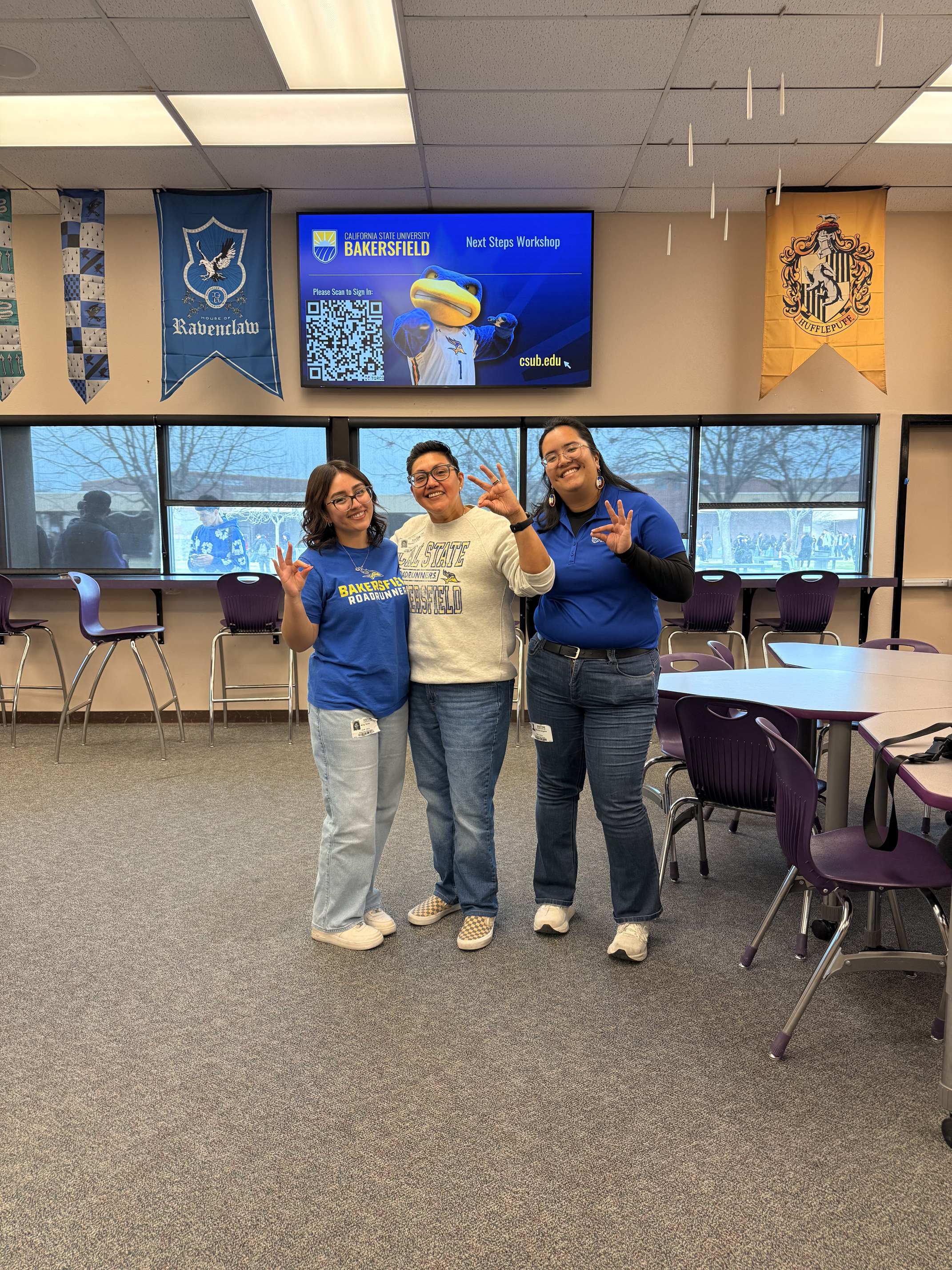
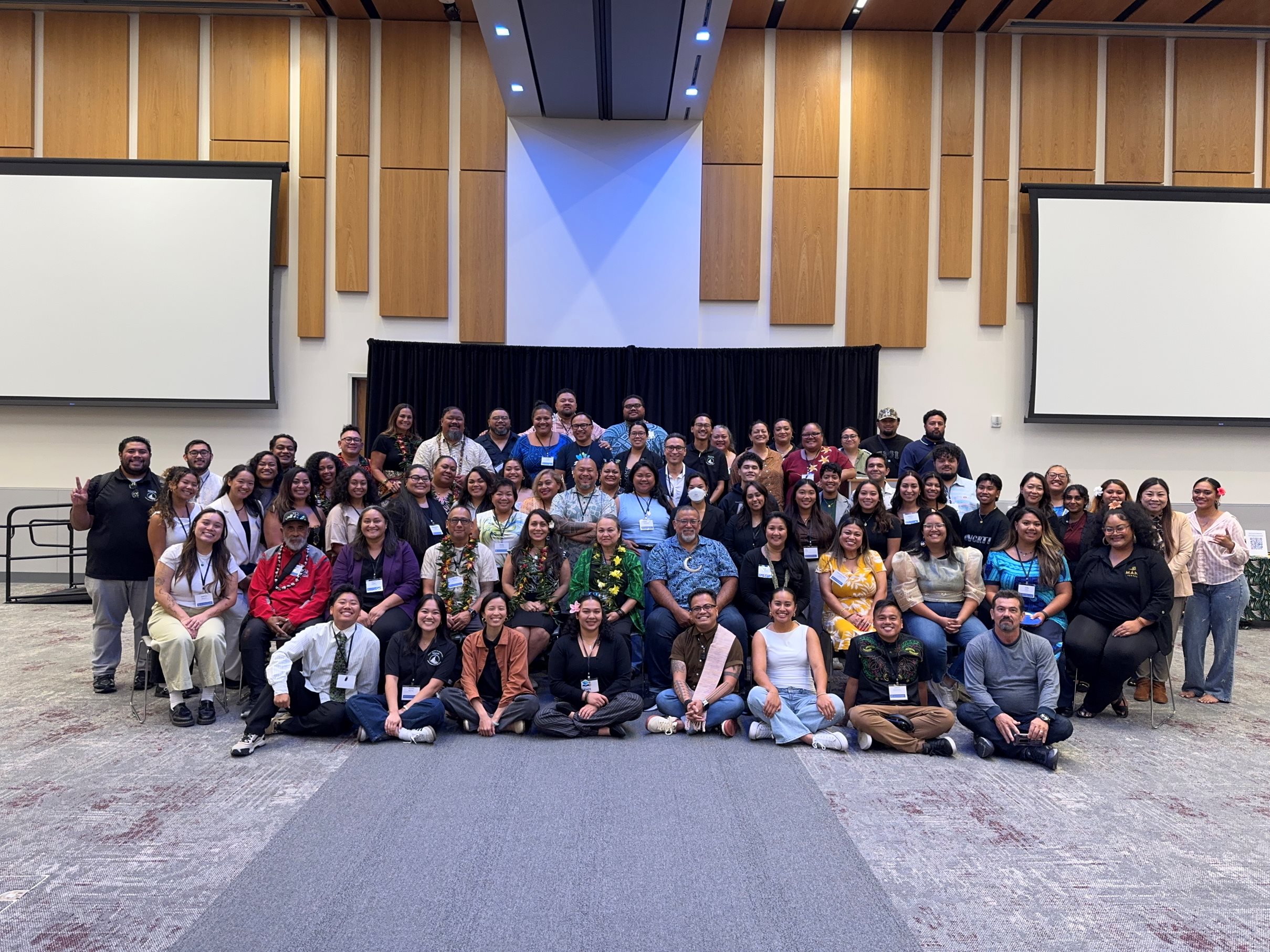
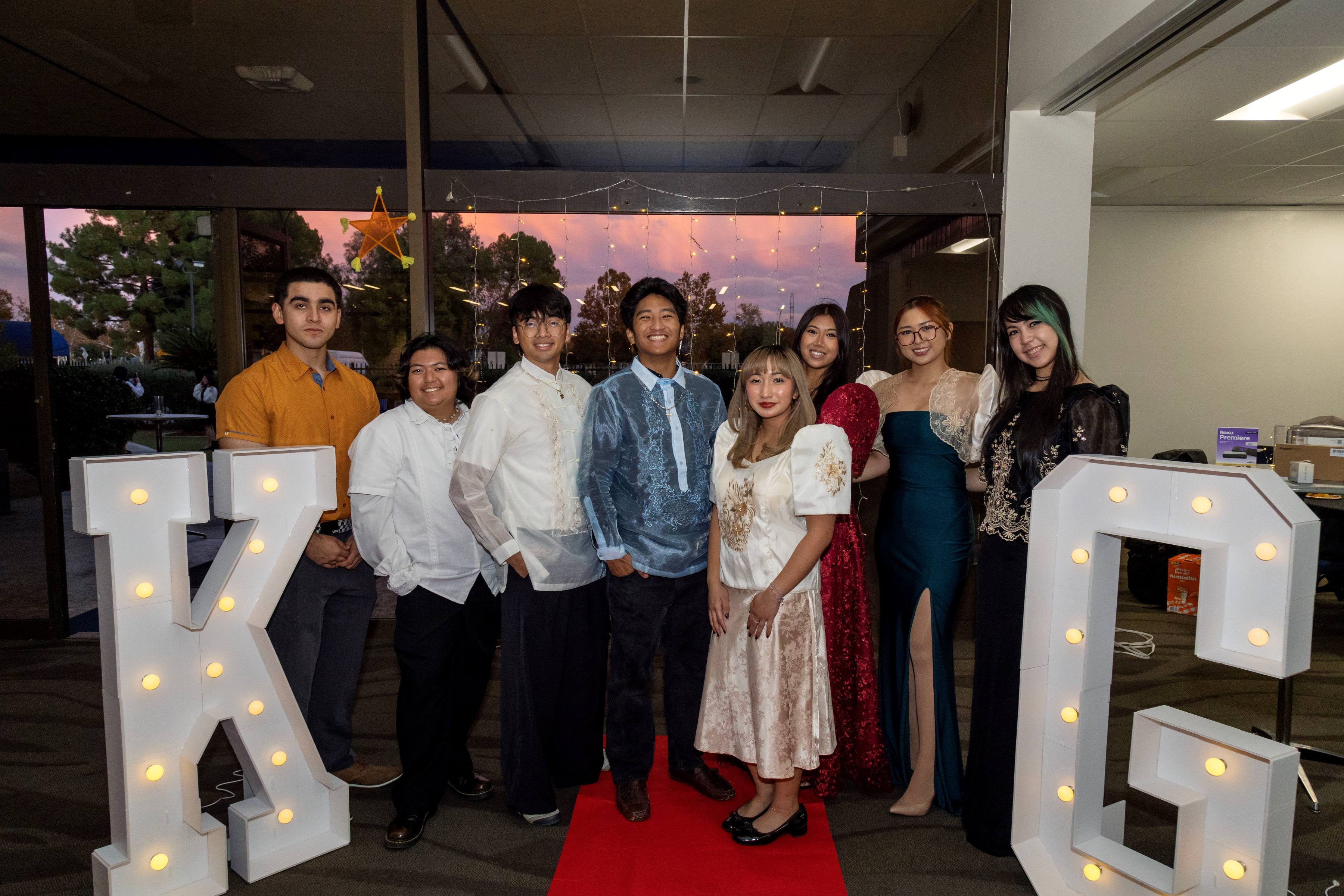
Community Events
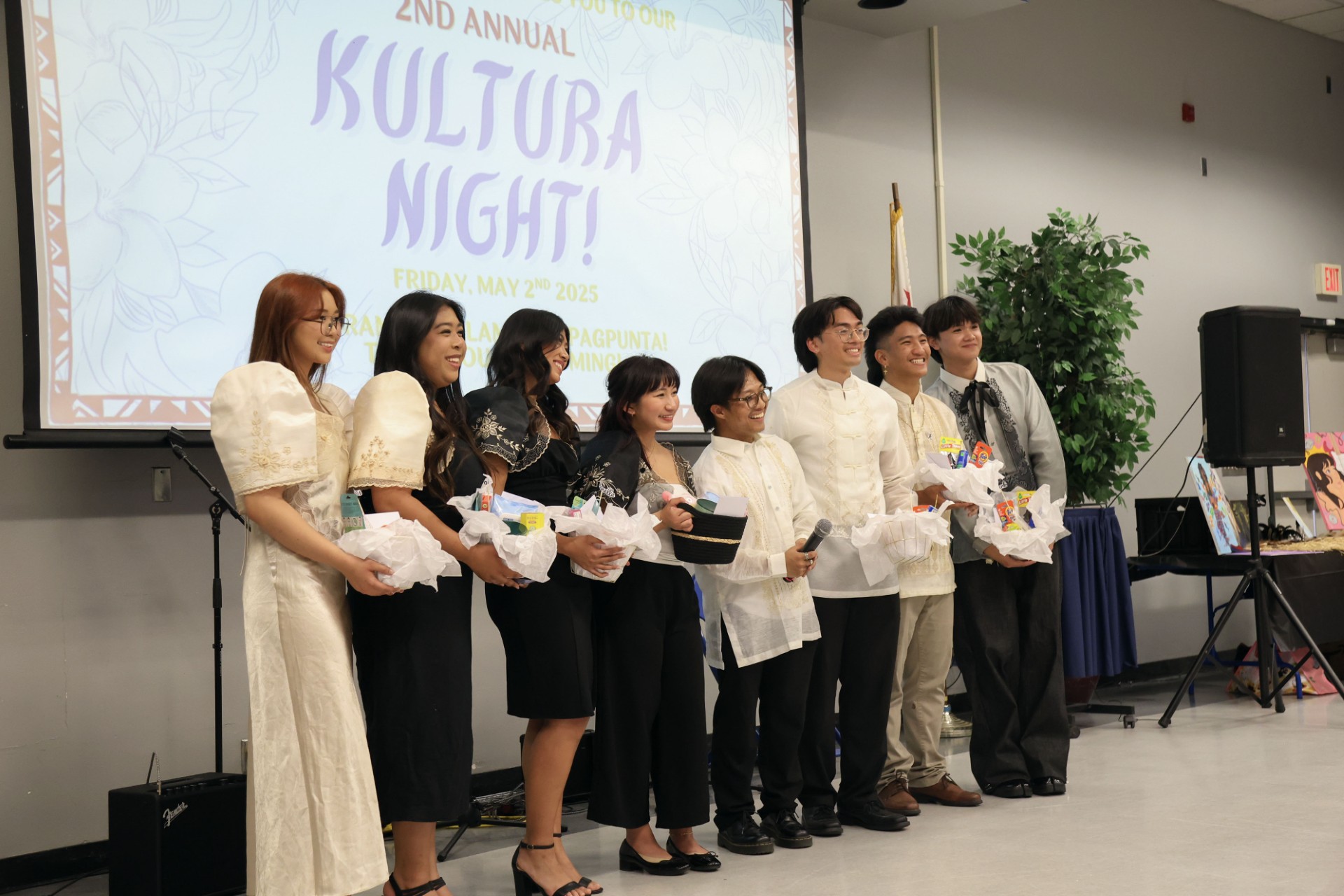
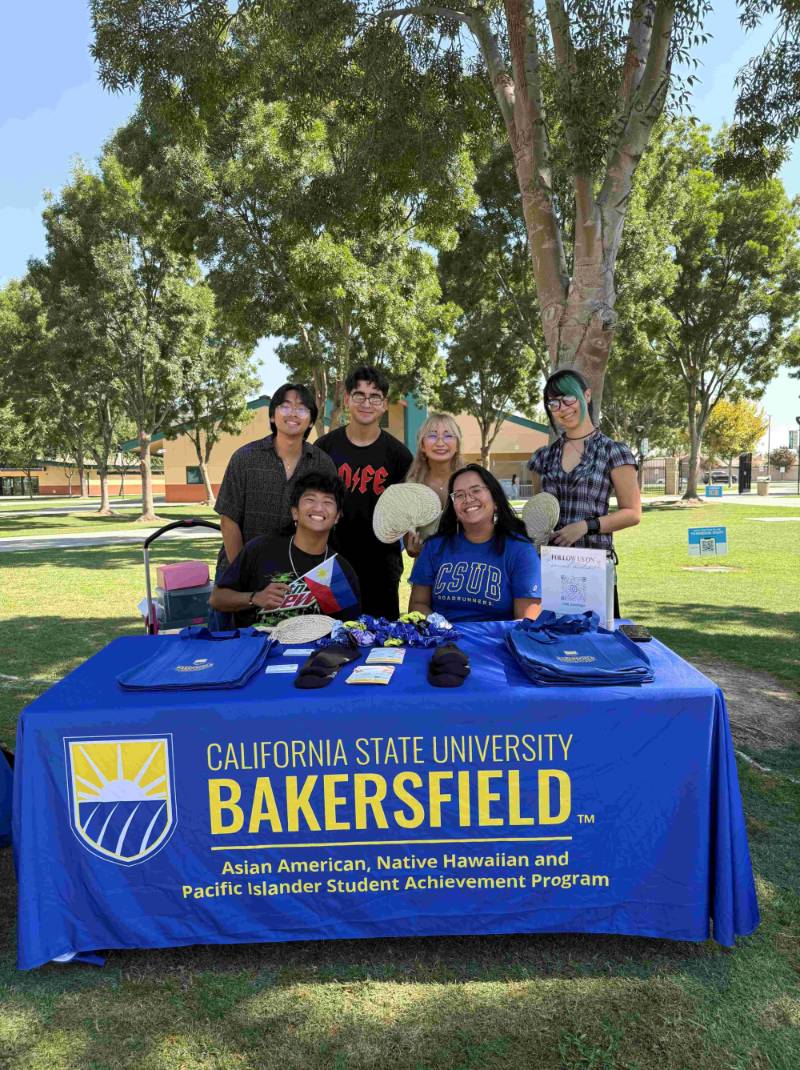
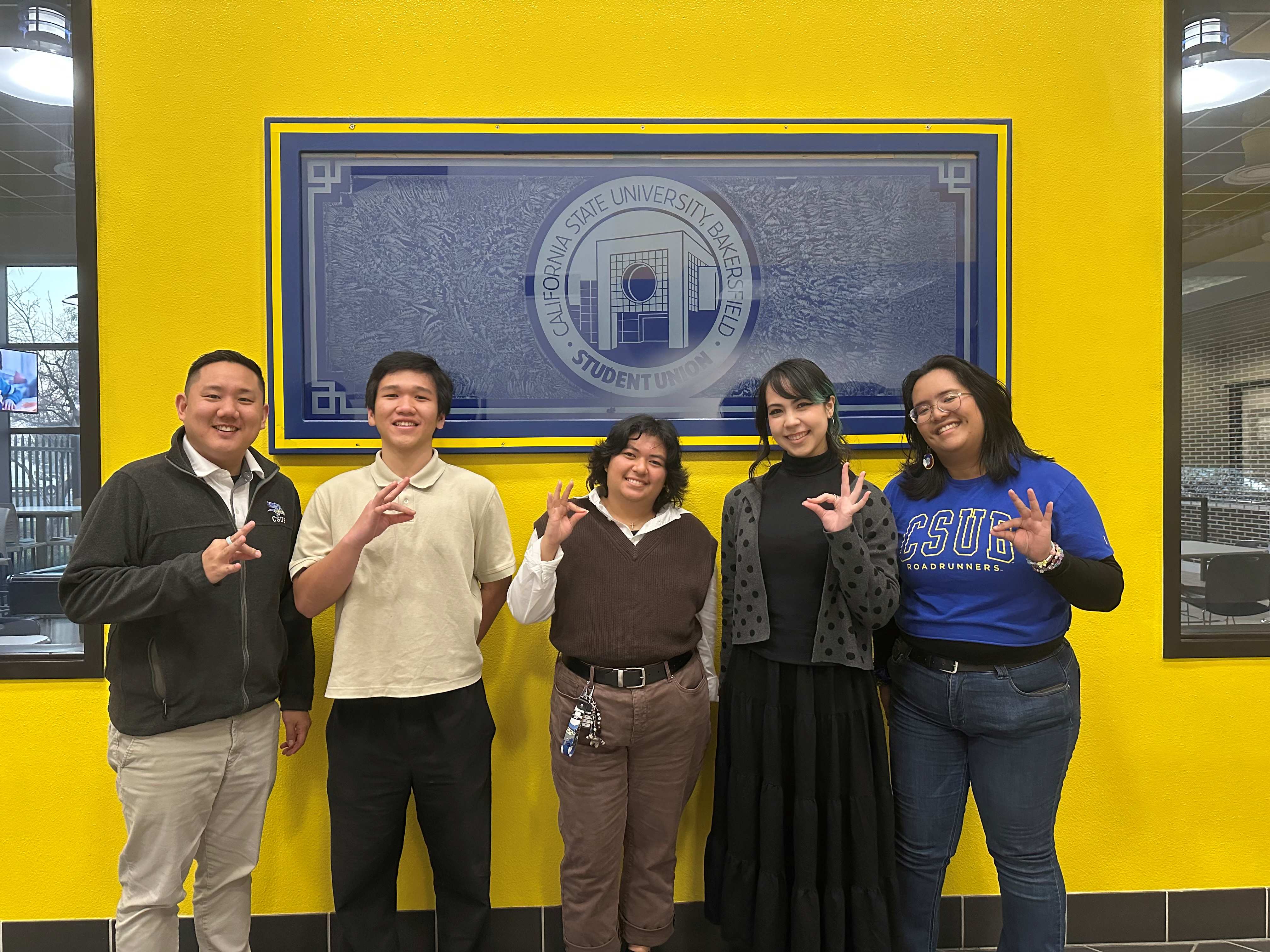
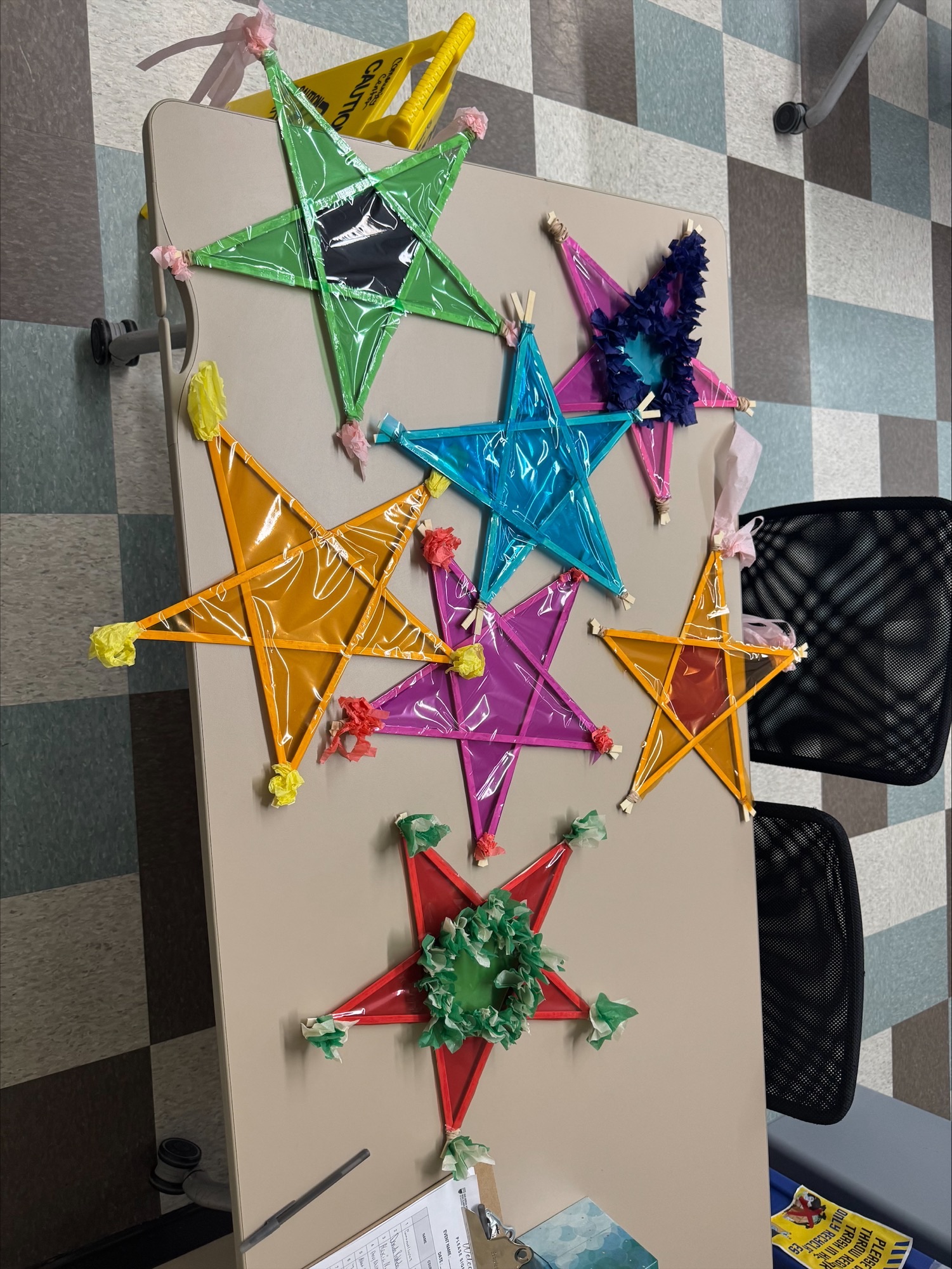
Meet the Team
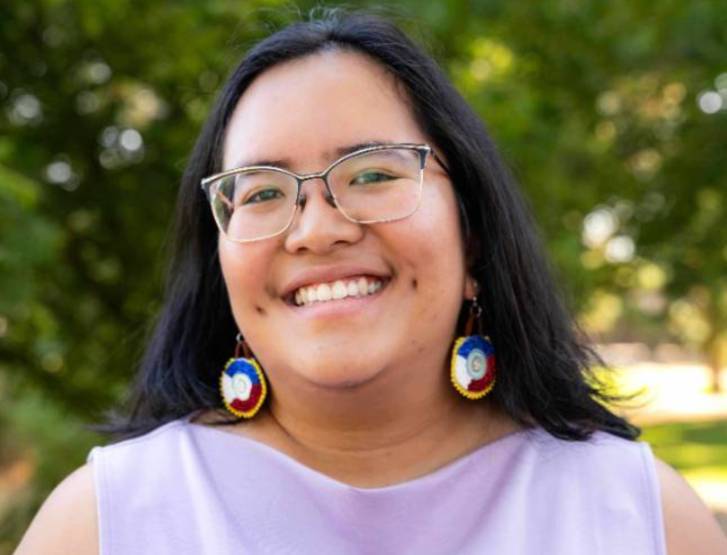
She spends her free time crafting, attending various AANHPI related events, reading, and watching TV shows.
Location
MAGEC is located in Student Housing West, Rohan Building. We are next to Parking Lot E and close to the Kegley Center for Student Success, CSUB Counseling Center, and Academic Advising and Resource Center (AARC). We also have provided the directions to Rohan through our CSUB Map here.
If you need assistance locating the center, please feel free to give us a call at (661) 654-3530 and we will help direct you.
The CSUB Mobile App is another way to locate our center and stay up to date on important information. Download the app and explore the campus 3D Map!