   Soc 338: The Indigenous Experience in the Americas Winter
2014
Instructor: Dr. Gonzalo F. Santos Class: 10:00 am - 11:25 am, MWF Room: DDH-104K |
|
|
|
Teaching Assistant:
Ms. Evelin Figueroa : evelinfigueroa02@hotmail.com : evelinfigueroa02@hotmail.comOffice: DDH-AA204 Phone: 661 654-2718 Office Hours: 11:30am-12:30pm, Fridays |
Textbooks:
* Alex Khasnabish, 2010. Zapatistas. Rebellion from the Grassroots to the Global. New York: Zed Books. ISBN: 9781848132085.
* Todd A. Einstadt et. al, 2013. Latin America's Multicultural Movements. The Struggle Between Communitarianism, Autonomy, and Human Rights. New York: Oxford University Press. ISBN: 9780199936281.

This course introduces students to the
socio-economic, cultural, & political conditions & experiences of modern
indigenous peoples within the
United States, in Latin America, and as U.S. immigrants.
We first focus on the rich and complex
Native American
experiences of First Nations within the United States over the course of the past two
centuries,
with emphasis on the indigenous movements from the 1930s to the 1970s, the federal policies and programs
that resulted from them, the partial recovery of their
sovereignty and re-invigorated
indigenous identity, and the socioeconomic
and political conditions today. We then explore, as an indepth case study, the origins, evolution, impact, and present
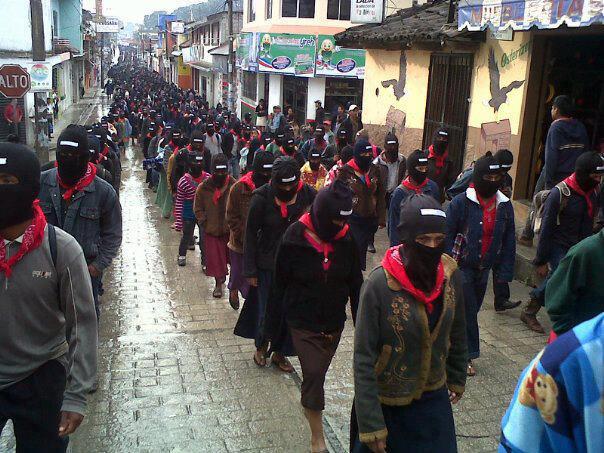
condition of the Zapatista indigenous rebellion in the Mexican State of
Chiapas, one of the world's most significant indigenous rebellions in the post-Cold War era. Finally, we study the rich
diversity and increasing centrality of indigenous movements in many
countries of Latin America, as a central aspect of the continent's long
quest for political sovereignty, social justice, economic &
cultural
self-determination, and development.
|
Gender Race & Ethnicity
Mission, Goals, & Objectives
Mission of the GRE Requirement: Students will develop an awareness, appreciation, and recognition of the social constructions of gender, race, and ethnicity in order to understand the diversity of human experience and values, particularly those contributions to knowledge and civilization made by members of historically under-represented groups. Fundamental to this requirement is the concept of cultural pluralism, which encompasses ethnic, cross-cultural, and intercultural studies as well as studies of the relationship(s) between dominant and non-dominant social groups. Goal 1. The course should have, as its principal focus, some aspect of the lives, roles, contributions, perspectives, and experiences of the particular group(s) discussed whether they be women or more specific ethnic and racial groups. Discussion of these groups needs to be set within a broadly defined context, one that might not be limited by national boundaries. Objective a. Students
taking the
course should be able to demonstrate an understanding of the broad
processes of multicultural/global issues related to issues of gender,
race, and/or ethnicity.
Goal 2. Relevant
scholarship on the course topic, in historical context, should be an
important part of course readings and discussions. Attention to past
and present theoretical approaches should be incorporated into the
course readings and discussions.Objective b. Students taking the course should be able to compare and contrast issues of gender, race, and/or ethnicity across different cultures. Objective a. Students
taking the
course should be able to compare past and present discipline-specific
theories related to gender, race and/or ethnicity.
Goal 3. The course
should
incorporate viewpoints of individuals whose lives may differ in terms
of gender, race, and ethnicity.Objective a. Students
taking the
course should be able to compare and contrast viewpoints of individuals
whose lives differ in terms of gender, race, and/or ethnicity.
Goal 4. The course
should
identify the structure and dynamics of domination and subordination.
The course should include critical analyzes of how cultural and
societal assumptions about gender, race, and ethnicity function in
individuals' lives.Objective a. Students
taking the
course should be able to identify the structure and dynamics of
domination and subordination in gender, race and/or
ethnicity.
Goal 5. The course
should
include the use of pedagogical techniques that encourage student
participation, to enable them to be active learners and critical
thinkers, and to examine their personal values.Objective b. Students taking the course should be able to analyze the ways in which cultural and societal assumptions about gender, race and/or ethnicity function in individual’s lives. Objective a. Students
taking the
course should be able to demonstrate critical thinking skills about
issues of gender, race and/or
ethnicity.
Objective b. Students taking the course should be able to identify how their personal values relate to and have changed regarding issues of gender, race and/or ethnicity. |
The course has a hybrid lecture-seminar format: Students in groups of two will take turns introducing the assigned readings for each class session, followed by Dr. Santos lectures and class discussion. Sometimes there will be a video presentation instead. Attendance is, of course, mandatory; all students must be punctual and come prepared to discuss the assigned readings. (Absences, tardiness, leaving early will be seriously penalized).
Besides these classroom activities, students will produce, also in
groups of two, two research projects on relevant topics related to the course:
the
first one must be on U.S. Native Americans (e.g., their historical movements or past experiences,
current economic
conditions or political issues, their cultural challenges - and these topics can cover Native Americans as a whole or
for a particular nation or tribes); and the second
one must be on an
indigenous people, issue, or movement in present-day Latin America
& the Caribbean, or Canada. Actual group research topics and
individual paper topics must be discussed with and approved by Dr.
Santos and/or Ms. Figueroa.
Class
Presentations: On a rotational basis for most of the
classes, groups of 2 students will introduce the readings assigned for the day: they will divide up aspects or sections of the
assigned readings, present and summarize them, and
finally critique them & pose a question for discussion. To do so, each presenter will prepare his/her own PowerPoint
presentation - no joint ones, please. When it's a group's turn
to present, it should show up early
to upload & test the presentations.
Each presentation will be individually evaluated based on: (a) the
accuracy and quality
of the summaries, (b) the analytical
strength of the critical
assessments,
(c) the pertinence of the question posed
at the end of the presentation, and (d) the style and
visual appeal of the delivery
(oral & visual).
Reading Assessments: To ensure that everybody come to
class fully prepared to discuss the assigned readings, students who are
not
presenting must bring to class a written "reading assessment" per
reading (chapter) assigned. The reading assessments must be turned in
to Dr. Santos at the beginning of each class session. No late reading assessments will be
accepted, unless the student has a pre-authorized absence cleared with
Dr.
Santos. DO NOT SEND YOUR READING ASSESSMENTS BY EMAIL, as they will not be accepted.
Note: Students presenting on a given day do not need to submit any reading assessment for that day.
Research Papers: Students will collaborate in their groups to do two research projects. Students will be asked to chose two pertinent historical/sociological topics relating to the historical or contemporary indigenous experiences in the United States, first, and in Latin America, the Caribbean, or Canada, second. The first paper (U.S.) is due on February 17 in class, and the second paper is due by noon on March 19 in Dr. Santos office. The students must obtain approval from Dr. Santos for their group research project and their individual paper sub-topics. Each research paper should be 6 to 10 pages in length (apart from the bibliography and any chart or map appendix), double-spaced, font 12, with one-inch margins. Each paper should have a title, appropriate and relevant citations from pertinent scholarly literature on that topic, robust analysis, empirical data, and a conclusion section, plus a bibliography of no less that five printed scholarly sources (journals and books) and perhaps a few other sources (from web sites, think tanks, etc.). Papers will be graded for length; quality & accuracy of analysis & critical thinking; clarity of language and paper organization; quality & contextual relevance of actual quotes; number & quality of bibliographical sources; and quality & relevance of empirical data presented, especially if presented in charts and figures that are discussed in the text.
You must visit Dr. Santos or Ms. Figueroa at their offices during their office hours (posted above) to discuss and get approval for your project topics and paper sub-topics.
Extra
Points: Perfect attendance - no
unexcused absences, tardiness, or leaving early -- will be
rewarded with 5 extra points at the end of the course. Another way to
get extra
credit is to attend
those campus or public events Dr. Santos announces in class and write
afterward a
two-page critical assessment report on them. Other ways are these:
(A) DEVELOP YOUR RESEARCH SKILL WHILE YOU DO YOUR RESEARCH PAPERS: To develop the students' research skills, there are two general studies courses that students are strongly encouraged to take, and anyone that does take either or both courses will receive extra credit in this course: These courses will enable students to develop the necessary competencies to navigate their way around the complexities of researching print and electronic sources. For further information contact librarian Christy Gavin (email: <cgavin@csub.edu>, phone: 661-664-3237).
Introduces students to effective research techniques using Library electronic resources. Emphasis will be placed upon skills necessary for the identification, retrieval, and evaluation of information for general and specific topics. Students will acquire the competencies necessary to develop an effective search strategy and find research materials, including references to journal articles, full text articles in electronic format, government publications, books, and Internet resources.
GST 153 - Research on the Internet (2 units)
Introduces students to the information resources available on the Internet for research purposes Students will develop general knowledge of the Internet, navigation skills, effective search strategy skills, familiarity with Internet finding tools, evaluation methodologies and other Internet research skills.
______________________________________________________________
Plagiarism: To prevent students from wittingly or unwittingly engaging in plagiarism, Dr. Santos strongly recommends students to carefully read and abide by the document CSUB Classifications of Plagiarism found at: http://www.csub.edu/tlc/options/resources/turn_it_in_help_page.shtml. Anyone found guilty of engaging in plagiarism will automatically fail the course and be reported to the Office of Student Discipline and Judicial Affairs for further disciplinary action.
 Grading: Each class presentation is worth up to 10
points (20 total). Each research papers are worth up to 20 points (40
total).
The reading assessments are worth, in the aggregate, the remaining 40 points.
The
extra credit students may
receive for
taking the suggested General Studies/Humanities courses will depend on
their final
grade in those courses, and may range from zero to 6 points (2 pts. per
course). Other extra credit activities may occur. Perfect attendance
will also be rewarded with 5 extra
points; unexcused absences and tardiness/leaving early will be
penalized with one
point off per instance. The final
letter grade will be assigned, on a scale of 0 to 100, as follows:
Grading: Each class presentation is worth up to 10
points (20 total). Each research papers are worth up to 20 points (40
total).
The reading assessments are worth, in the aggregate, the remaining 40 points.
The
extra credit students may
receive for
taking the suggested General Studies/Humanities courses will depend on
their final
grade in those courses, and may range from zero to 6 points (2 pts. per
course). Other extra credit activities may occur. Perfect attendance
will also be rewarded with 5 extra
points; unexcused absences and tardiness/leaving early will be
penalized with one
point off per instance. The final
letter grade will be assigned, on a scale of 0 to 100, as follows:
| 94-100 = A | 87-89 = B+ | 77-79 = C+ | 65-69 = D |
| 90-93 = A- | 84-86 = B | 74-76 = C | < 65 = F |
| 80-83 = B- | 70-73 = C- |
Office Hours & E-Mail to Dr. Santos & Ms. Evelin Figueroa
Dr. Santos will generally be available at his office after class - see his posted office hours above. Students are encouraged to come see him or to call him (664-2191) during these times. For emails, please be brief, clearly identify your business in the subject heading, and make sure to sign off with your full name. The T.A., Ms. Evelin Figueroa, will be available to meet with you at her office, DDH-AA204, after class on Fridays, or by appointment. She will be in charge of evaluating the reading assessments, will attend Friday classes, and handle most email traffic. If you wish to set up an appointment, you should email her and leave her a phone number where she can reach you.
Schedule
of Assigned
Readings, Videos & Group Presentations
My GROUP # is: _____ We present on these dates: ___________ and __________
My other GROUP member is:
___Name______________________Phone_____________________Email_________________